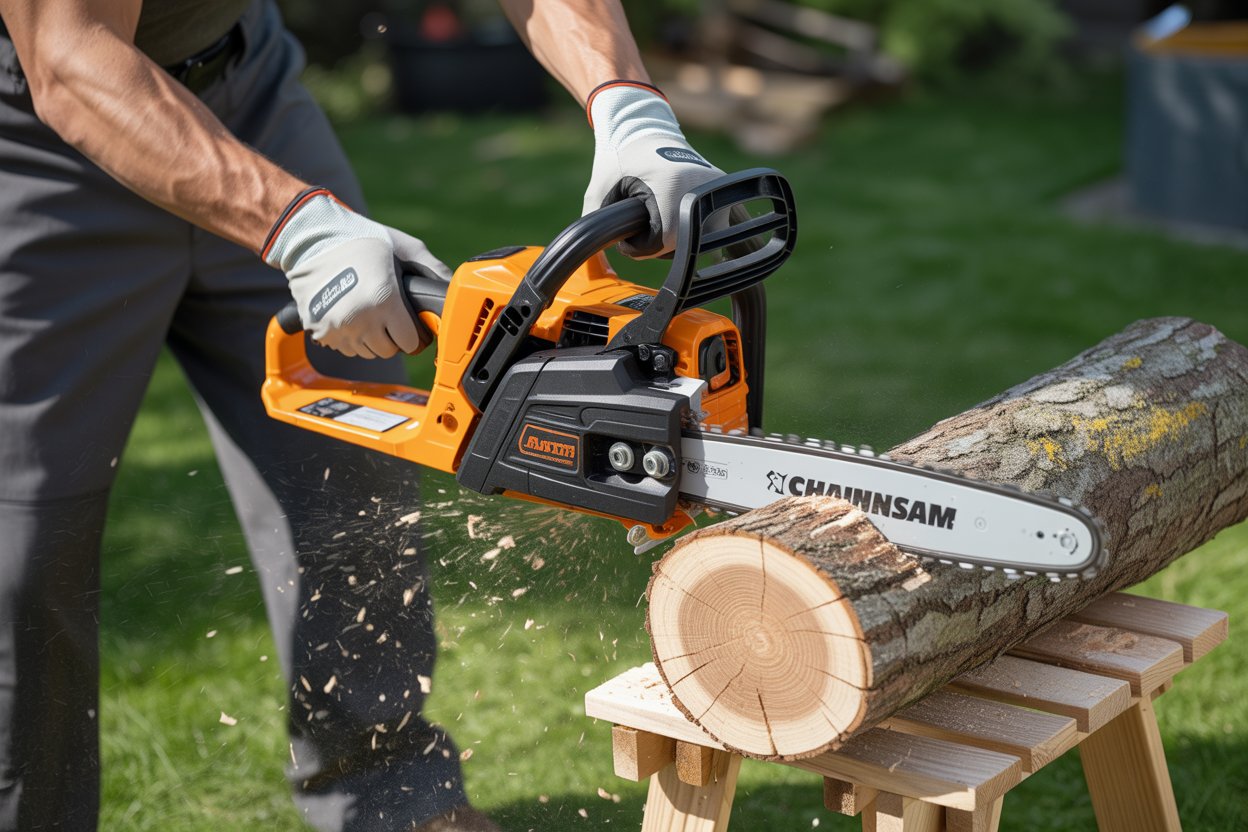
The first time I used a cordless chainsaw, I didn’t expect it to feel so different. No buzzing cord trailing behind me, no fear of cutting through it by accident. Just me, the saw, and the sound of clean slicing. That’s when I realized—cordless chainsaws aren’t just convenient; they change how you work.
Cordless chainsaws offer advantages such as mobility, easy start-up, low noise, and zero emissions compared to corded ones.
They are ideal for outdoor or remote work, require less maintenance, and provide safer, unrestricted movement without power cords.
If you’ve ever tripped over a tangled extension cord mid-cut, you’ll understand the joy of freedom that a cordless model brings. Let’s explore what really sets these battery-powered machines apart.
Which is better, a corded or a cordless chainsaw?
I get this question from clients all the time — and honestly, it depends on what you need. But if you value freedom of movement, cordless wins hands down.
Cordless chainsaws are better for mobility, safety, and outdoor convenience, while corded chainsaws provide continuous power for longer, stationary tasks.
The choice depends on your work style — portability versus uninterrupted runtime.
When I used to work with corded saws in our YOUWE testing yard, I loved their power but hated the limitation. The cable always managed to get caught under something — or worse, I’d step on it right when I needed to move. Switching to cordless felt like stepping into a new era of comfort and control.
Key Differences Between Cordless and Corded Chainsaws
| Feature | Cordless Chainsaw | Corded Chainsaw |
|---|---|---|
| Mobility | Excellent, work anywhere | Limited by power outlet |
| Power Source | Rechargeable battery | Continuous electricity |
| Maintenance | Lower | Moderate |
| Ideal Use | Outdoor, mobile work | Indoor, fixed locations |
| Noise Level | Quieter | Louder |
Cordless chainsaws1 might not run forever, but they make every minute count — no restrictions, no mess, no cords in the way.
Are battery-operated chainsaws worth it?
Let me tell you — I used to think battery-powered tools2 were just for light jobs. That was years ago. Now, with today’s lithium technology, they’ve earned their spot even in professional toolkits.
Battery-operated chainsaws are worth it for users seeking clean, quiet, and portable cutting.
They offer enough power for pruning, yard work, and small-to-medium log cutting, with minimal noise, vibration, and maintenance effort.
What makes them truly “worth it” isn’t just performance — it’s peace of mind. Imagine not worrying about oil leaks, spark plugs, or fuel mixing. Just charge and go.
In my own backyard, I’ve cut through thick branches and old firewood using a 14-inch cordless model. The torque surprised me every time — smooth, confident, and consistent. And when I lent it to my neighbor, he ended up ordering five units for his garden supply business.
Why Cordless Chainsaws Are Worth Buying
| Benefit | Description |
|---|---|
| Clean Energy | No fuel, zero emissions |
| Easy Operation | One-button start, less vibration |
| Low Maintenance | No spark plugs or oil mixing |
| Portability | Use anywhere, anytime |
Once you try one, it’s hard to go back. It’s not just about cutting wood — it’s about cutting stress out of your work.
Can cordless chainsaws cut big trees?
Now, this one’s a classic. Everyone assumes cordless means “weak.” I’ve had people laugh when I told them I cut a fallen walnut tree with a cordless chainsaw — until they saw the stump.
Yes, cordless chainsaws can cut big trees up to 14–18 inches in diameter, depending on bar length and motor torque.
For thicker trunks, cutting from both sides increases efficiency without overloading the motor.
Let’s be real — a cordless saw won’t replace a professional gas monster for logging massive pines. But for medium-sized trees, especially in backyards or parks, it’s more than capable.
I once tested our 16-inch YOUWE model on a storm-damaged ash tree. It took about two minutes to get through the main trunk — quietly, cleanly, and without a single hiccup. The trick was letting the saw’s weight do the work instead of forcing it. The torque from our brushless motor kept the chain speed steady, and I didn’t have to fight with cords or fumes.
Example: Cutting Capacity by Chainsaw Size
| Chainsaw Bar Size | Max Tree Diameter (One-Side Cut) | Typical Application |
|---|---|---|
| 10 inch | 8 inch | Light pruning |
| 12 inch | 10 inch | Garden maintenance |
| 14 inch | 12 inch | Firewood cutting |
| 16 inch | 14–18 inch | Tree felling, storm cleanup |
If you’re in distribution, your customers will love this — especially landscapers or homeowners who need reliable performance without the hassle of gas or cords.
Conclusion
Cordless chainsaws aren’t just about cutting wood — they’re about cutting limitations.
They’re cleaner, quieter, and more flexible than corded ones, letting you work where you want, how you want. Once you feel that freedom, you won’t miss the cord again.