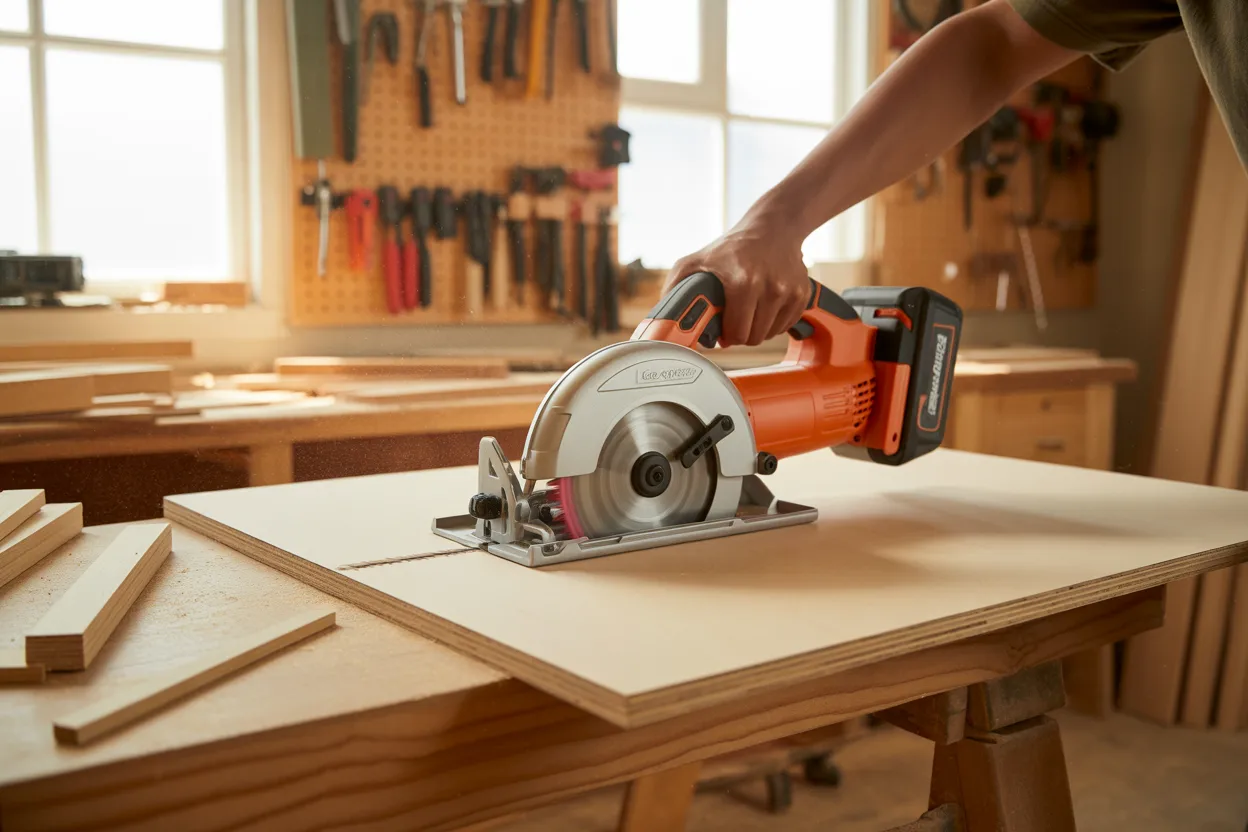
When people ask me what a cordless circular saw1 is really used for, I always think back to the first time I cut a sheet of plywood on a quiet Sunday morning. No cable. No fighting the extension cord. Just me, the tool, and that clean, satisfying cut.
A cordless circular saw is mainly used for cutting wood, sheet materials, plastics, and some light metals. It allows users to cut straight lines quickly without a power outlet, making it ideal for construction work, home DIY, outdoor jobs, and tight spaces.
It’s the kind of tool I rely on when I need freedom—when I’m on a job site with no power box yet, or helping a friend fix a garden shed. Let’s walk through where this tool really shines.
What are the applications of circular saw?
Sometimes the simplest tools can do the greatest variety of work, and a circular saw is a good example of that.
Circular saws are used for cutting wood, plywood, MDF, plastics, and certain metals. Their common applications include framing, roofing, flooring, trim work, and general carpentry. With the right blade, they offer fast, straight cuts for both professional and DIY tasks.
Dive Deeper: Where Circular Saws Truly Fit In
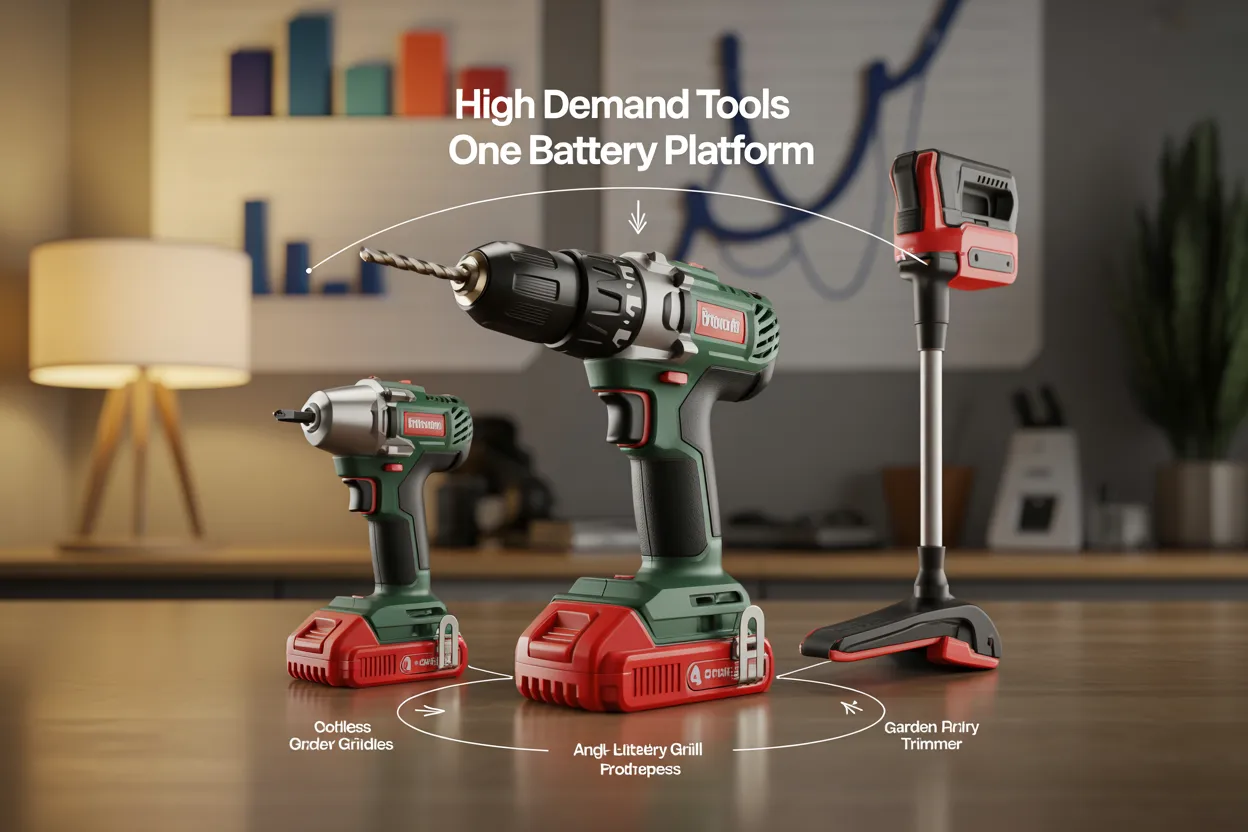
Whenever I visit a customer’s warehouse in Europe, I see circular saws stacked next to drill drivers and grinders—because they’re part of the “core trio” of tools most distributors rely on.
Circular saws show up everywhere:
- On construction sites where workers cut OSB and beams under tight deadlines
- Inside home garages where DIY parents build shelves
- In small carpentry shops that depend on predictable, stable cuts
And honestly, it’s hard to beat their versatility.
Common Material Applications
| Material | Typical Usage |
|---|---|
| Wood & lumber | Framing, beams, planks |
| Plywood & sheet goods | Cabinets, flooring, roofing |
| PVC & plastics | Home improvement, trimming |
| Aluminium sheets | Light construction, signage |
With the right blade, I’ve even used one to cut old laminate countertops when helping a friend redo his kitchen. The cut wasn’t perfect—but it got the job done without needing a big table saw. That’s the beauty of circular saws: they travel with you and keep your workflow moving.
If you want an example of blade choice2, check out resources like wood-cutting blades or multi-material saw tips.
What is a portable circular saw used for?
A portable circular saw is basically the “grab-and-go” version that most of us keep within arm’s reach.
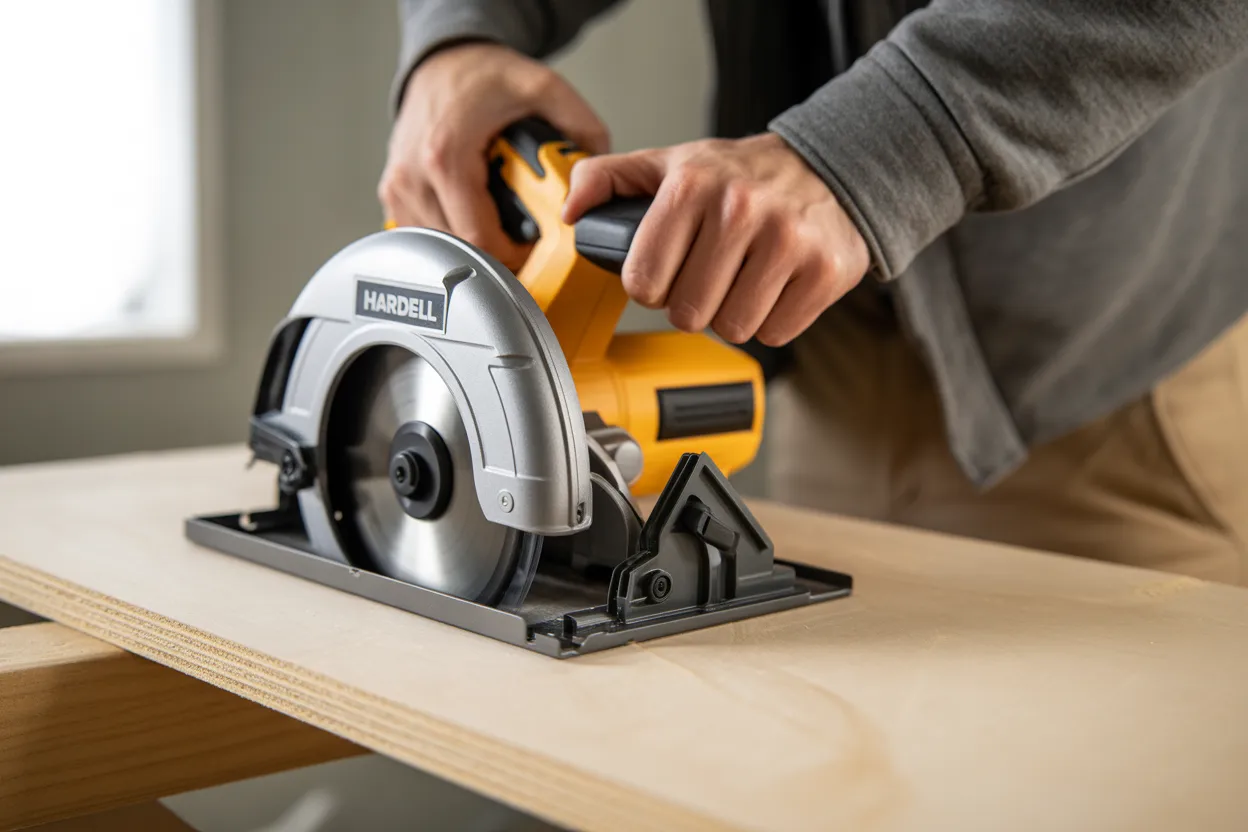
A portable circular saw is used for cutting materials on-site without heavy equipment. It handles quick cuts in wood, sheet boards, and plastics. Its compact size allows for overhead cuts, ladder work, edge trimming, and jobs in tight or remote locations.
Dive Deeper: Why I Always Keep One in My Van
Let me share a moment:
I once had a distributor from Italy call me in a mild panic because his customer needed to trim door frames in an old building—with almost no space to work. A big miter saw wouldn’t fit. A table saw was impossible.
A portable circular saw saved their day.
Why Portable Matters
- It fits in one hand
- It cuts fast without setup time
- It works in tiny corridors
- It’s light enough for overhead cutting
- It’s practical for rooftop or ladder work
Sometimes convenience is more valuable than raw power.
Another thing I love: you can carry it for the “one cut” moment—like trimming a sticking door or shortening a plank—without pulling out half your workshop. It’s the tool that quietly becomes the hero of small repairs.
For more guidance, see resources such as compact saw handling tips.
Is it better to have a corded or cordless circular saw?
Ah, the classic debate. I’ve heard it from buyers, distributors, and even stubborn craftsmen who still love their 15-year-old corded saw.
Corded saws provide consistent power and are suited for heavy-duty work. Cordless saws offer mobility, safer handling, and convenience for on-site cutting. Corded is better for long, intensive cutting sessions; cordless is better for quick, flexible, and remote jobs.
Dive Deeper: The Real Decision Most Buyers Face
When I talk to European distributors, the decision usually isn’t “which is better”—it’s “which fits your customer base?”
Corded used to dominate. But once lithium-battery systems improved, things changed fast. On construction sites3, workers move constantly. They don’t want cables catching on scaffolding or needing a generator in the early phase of a project.
How They Compare
| Feature | Corded | Cordless |
|---|---|---|
| Power consistency | High | High (with brushless motors) |
| Mobility | Low | Very high |
| Safety (no cable) | Moderate | High |
| Best for | Heavy-duty, long cuts | On-site, quick cuts |
| Startup time | Instant | Instant |
And here’s something I see often:
Teams mix both. Corded in the main workshop. Cordless on-site or in vans.
One buyer from Germany once told me: “Cordless isn’t a luxury anymore. It’s survival.” And honestly, he’s right—especially for younger craftsmen who grew up on battery tools.
If you want extra reading, check out corded tool durability notes or battery platform guidance.
Conclusion
Cordless circular saws shine when you need freedom, fast cuts, and flexibility. For many of my customers, they’ve become the tool that keeps projects moving—no cables, no limits.