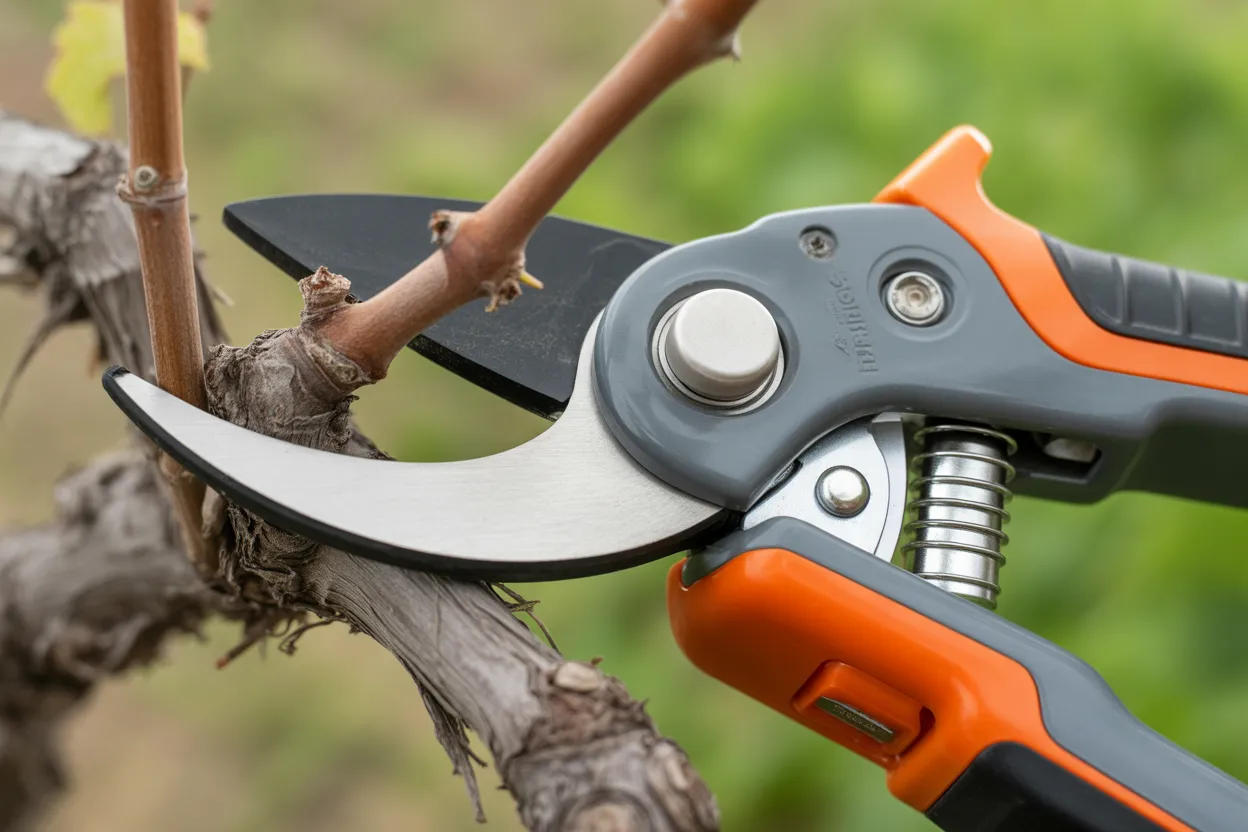
The first time I pruned grapevines with battery-operated shears1, I felt like I’d just discovered a secret shortcut in gardening. No more sore wrists, no more fighting with tangled vines. Just smooth, clean cuts—and suddenly, pruning felt less like a chore and more like therapy.
Battery-operated pruning shears use rechargeable lithium batteries to power precise, effortless cuts. They’re ideal for pruning grapevines, fruit trees, and shrubs. These shears reduce hand fatigue, improve efficiency, and deliver clean cuts that help plants heal faster.
If you’ve ever spent a long afternoon snipping vine after vine by hand, you know how it feels—your fingers ache, your grip weakens, and your patience wears thin. That’s where electric shears come in. Let’s look at how they work, whether they’re worth it, and how to choose the right pair for your vineyard.
Are electric pruning shears worth it?
If you spend more than an hour pruning, the answer is almost always yes.
Electric pruning shears are worth it for frequent pruning tasks because they save time, reduce hand strain, and provide consistent, clean cuts. They are especially useful for grapevines, orchards, and gardens with large numbers of branches.
When I first switched to electric shears, I was skeptical. Would they really make that big of a difference? Ten minutes in, I knew. I’d already pruned what usually took me half an hour—without a single cramp in my hand.
Battery shears work like an extension of your hand. With one squeeze of the trigger, the motor powers a sharp blade that glides through branches cleanly. For grapevines, this is crucial. The smoother the cut, the less stress on the vine, and the faster it recovers.
Here’s a quick breakdown comparing electric and manual shears:
| Feature | Electric Shears | Manual Shears |
|---|---|---|
| Cutting effort | Minimal | High |
| Speed | Fast | Moderate |
| Consistency | Even cuts | Depends on user strength |
| Ideal for | Vineyards, orchards | Small gardens |
| Price | Higher | Lower |
If you’re managing multiple vines or running a small vineyard, electric shears aren’t just worth it—they’re sanity savers. Learn more about efficiency tips for vineyard maintenance here.
Do electric pruning shears work?
Yes—and surprisingly well.
Electric pruning shears work by using a motorized blade powered by a rechargeable battery to cut branches up to 30 mm thick. They deliver consistent pressure, ensuring clean cuts with minimal effort.
I’ll never forget my first winter pruning session with them. The vines were thick, twisted, and dry—normally a nightmare for manual shears. But the electric ones sliced through like butter. It wasn’t just faster—it was cleaner, more precise.
The magic lies in their design. Most models use a brushless motor, which provides steady torque and a sharp, consistent motion. The rechargeable lithium battery gives you about 4–8 hours of cutting time, depending on capacity.
Common branch sizes and performance
| Branch Thickness | Electric Shears | Manual Shears |
|---|---|---|
| 5–10 mm | Effortless | Easy |
| 10–20 mm | Smooth | Requires effort |
| 20–30 mm | Possible | Difficult |
| Over 30 mm | Not ideal | Not possible |
For grapevine growers, that precision matters. Clean cuts mean less chance of disease and smoother healing for each vine. You can also find pruning shears with adjustable blades—perfect if you switch between delicate twigs and thicker stems. Check more about blade options here.
What are the best pruning shears to buy?
The “best” depends on how you prune—but I’ve found a few things that always matter.
The best pruning shears combine sharp blades, ergonomic handles, and strong battery performance. Look for brushless motor models with replaceable batteries and carbon steel blades for long-term durability.
When I tested different brands, I noticed one pattern: the cheaper ones worked fine—until the battery started to fade or the blade dulled too quickly. For serious grapevine pruning, durability matters as much as sharpness.
Here’s what I look for now before buying:
- Blade Material: High carbon steel or SK5 for long-lasting sharpness.
- Battery: At least 16.8V lithium battery for 4+ hours runtime.
- Motor Type: Brushless for smoother and quieter operation.
- Safety Features: Auto-shutoff and double trigger for accident prevention.
- Accessories: Extra blades, spare battery, and a carrying case are bonuses.
Example comparison
| Model Type | Battery Voltage | Blade Material | Runtime |
|---|---|---|---|
| Standard | 16.8V | SK5 Steel | 4 hrs |
| Professional | 21V | Carbon Steel | 6–8 hrs |
It’s a good idea to keep an extra battery handy—nothing kills motivation faster than running out of charge mid-row. You can explore recommended pruning tools2 here.
What is the difference between garden shears and pruning shears?
They might look similar, but they serve different purposes.
Garden shears are larger and used for trimming hedges or grass, while pruning shears are smaller and designed for cutting individual branches or stems. Pruning shears offer precision; garden shears cover wider areas.
When I started gardening, I used my garden shears for everything—hedges, vines, branches. I didn’t realize how much control I was missing until I picked up a real pair of pruning shears. The difference was immediate—cleaner cuts, easier handling, less plant damage.
Here’s how they compare:
| Tool Type | Size | Purpose | Precision |
|---|---|---|---|
| Garden Shears | Large | Hedge and shrub trimming | Low |
| Pruning Shears | Compact | Branch and vine cutting | High |
Why it matters
Using the right tool keeps your plants healthier. Garden shears are for shaping large areas, while pruning shears are for detailed work—like removing dead wood or shaping grapevines for better sunlight exposure.
When I prune vines now, I use battery-powered pruning shears for control, and save the big garden shears for trimming the edges of the vineyard. The right match makes all the difference.
For more on choosing garden vs. pruning tools, read this guide.
Conclusion
Battery-operated pruning shears make grapevine pruning faster, cleaner, and easier on the hands. Once you try them, it’s hard to go back to manual. They’re not just tools—they’re time savers that turn hard work into something you might actually enjoy.